 (1).png)
is a type of surgical procedure that allows a surgeon to access the inside of the abdomen (tummy) and pelvis without having to make large incisions in the skin. This procedure is also known as keyhole surgery or minimally invasive surgery.
Laparoscopy is carried out under general anaesthetic, so you won't feel any pain during the procedure.
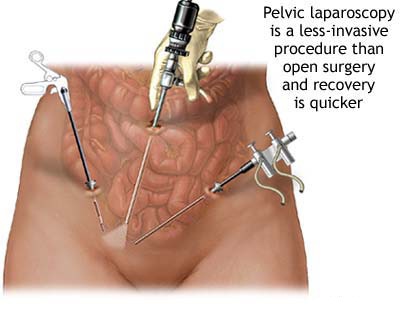
During laparoscopy, the surgeon makes one or more small incisions in the abdomen. These allow the surgeon to insert the laparoscope, small surgical tools, and a tube used to pump gas into the abdomen. This makes it easier for the surgeon to look around and operate.
After the procedure, the gas is let out of your abdomen, the incisions are closed using stitches and a dressing is applied.
You can often go home on the same day of your laparoscopy, although you may need to stay in hospital overnight.
Laparoscopy has many uses, including the diagnosis and treatment of chronic pelvic pain, endometriosis, fibroid tumors, infertility, and ovarian cysts.
Many surgical procedures that used to be performed through larger abdominal incisions are now performed laparoscopically.
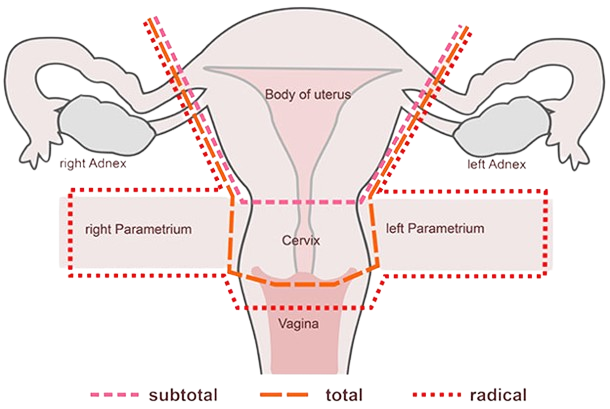
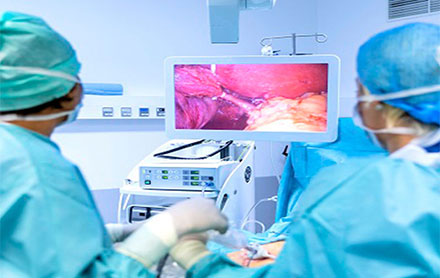
Because laparoscopic surgery eliminates the need for large abdominal incisions, the recovery time is extremely fast. Even with hysterectomy procedures, most women are back to normal activities within a few weeks.
Not all gynecologic conditions can be treated with laparoscopy. Very large tumors or masses may need open surgery. Extensive endometriosis can also be very difficult to treat laparoscopically because of associated adhesions (scar tissue), which can involve the adjacent bowel, bladder, ureters, etc. Adhesions cannot be diagnosed with sonography or CT scans, so an operation may start with the laparoscope and end with an open procedure, if extensive adhesive disease is present.
As with any surgery, there is a small risk of problems with laparoscopy. It is important to choose a surgeon who has experience in advanced laparoscopy to properly evaluate you for this type of procedure.
 by-
by-